Kneeling at the Creed: Fatherhood, Authority, and the Silence of the Holy Spirit
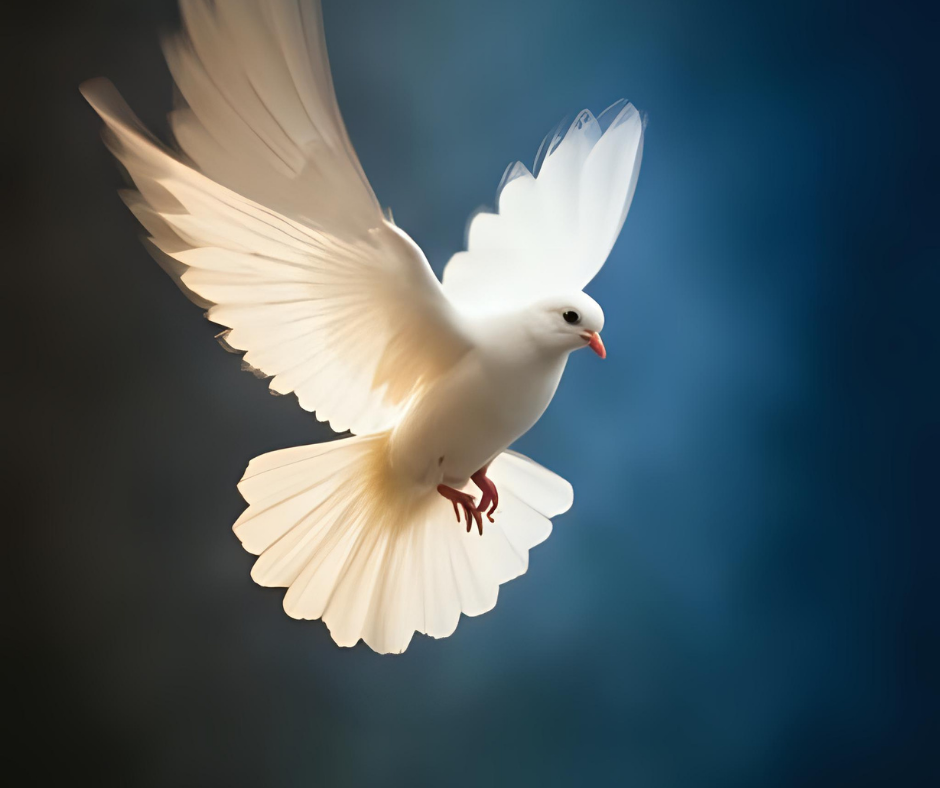
At Christmas Mass, something unusual happened.
During the Profession of Faith, when we reached the words
“and by the Holy Spirit was incarnate of the Virgin Mary, and became man,”
the priest paused—and invited us to genuflect.
One knee to the ground.
Silence.
Weight.
I realized in that moment how rarely we slow down long enough to let the Creed act on us.
This was not a flourish.
Not a personality choice.
Not an emotional cue.
It was the Church quietly insisting: this moment matters.
The Knee Bends Where Words Fail
The Church asks us to bow at the Incarnation every Sunday.
But on Christmas and the Annunciation, she asks more.
She asks us to kneel.
Why?
Because here we confess the impossible:
God did not merely speak again.
God did not send another prophet.
God did not issue clearer instructions.
God became man.
And He did so:
Not by human will
Not by force
Not by spectacle
But by the Holy Spirit.
The genuflection is not directed to the Spirit as a separate object of devotion.
It is an act of awe before the mystery that God crossed the threshold into flesh.
A father understands this instinctively.
When something sacred is happening—
You don’t explain.
You don’t debate.
You stand still.
Or in this case, you kneel.
The Holy Spirit Is Not Another Jesus — and That Matters
Modern language has made us sloppy.
We say the Holy Spirit is a “Person,” and people imagine:
Another body
Another voice
Another visible figure walking alongside Jesus
That is not Catholic teaching.
The Holy Spirit:
Is fully God
Is eternally personal
Is not incarnate
Has no body
This does not make Him distant.
It makes Him interior.
The Son reveals the Father by becoming visible.
The Spirit reveals the Son by dwelling within.
This is why Scripture never presents the Spirit as drawing attention to Himself.
Christ says plainly:
“He will glorify Me.” (John 16:14)
The Holy Spirit does not compete.
He does not perform.
He does not insist on being noticed.
He forms, moves, convicts, strengthens, and unites—quietly.
A good father recognizes this pattern.
Authority That Does Not Announce Itself
The Holy Spirit is called in the Creed:
“Lord and Giver of Life.”
Yet He does not rule the way the world rules.
He:
Overshadows Mary without noise
Inspires prophets without spectacle
Descends at Pentecost as fire only after Christ ascends
Sanctifies the sacraments invisibly
Speaks most clearly in conscience, not crowds
This is not weakness.
This is true authority.
A father who must constantly assert himself has already lost ground.
A father who is present, ordered, and steady:
Doesn’t need to raise his voice
Doesn’t need to be everywhere at once
Doesn’t need to explain himself endlessly
His authority is felt, not announced.
That is how the Holy Spirit works in the soul.
Why We Pray With the Holy Spirit More Than At Him
The Church absolutely teaches that we may pray to the Holy Spirit.
She always has.
But notice how she prays:
Come, Holy Spirit
Send forth Your Spirit
Renew the face of the earth
These are invocations, not conversations.
The Spirit’s role is not to become the object of spiritual fixation.
His role is to draw us into Christ, who brings us to the Father.
This protects us from a subtle danger:
Treating prayer as self-generated
Mistaking emotional movement for grace
Replacing obedience with experience
The Spirit forms sons, not performers.
Fatherhood Learns by Watching God
At Christmas Mass, kneeling during the Creed did something quiet but decisive.
It reminded me:
I do not manage mysteries
I receive them
I submit before I speak
I kneel before I act
My son does not need me to explain everything about God.
He needs to see what I kneel before.
He will learn reverence not from my arguments,
but from my posture.
This is how faith is transmitted:
Through silence
Through obedience
Through embodied reverence
The Holy Spirit does not shout.
And neither should a father who knows whom he serves.
Closing Prayer (SJW)
Come, Holy Spirit—
Not to entertain us,
Not to flatter us,
But to form us.Teach us to kneel where the Church kneels,
To be silent where mystery speaks,
And to lead our children not by noise,
But by presence.Through Christ our Lord. Amen.
Catechism Sidebar: The Holy Spirit & the Incarnation
“No one comprehends the thoughts of God except the Spirit of God.”
— 1 Corinthians 2:11
The Holy Spirit Is Fully God
“The Holy Spirit is the Third Person of the Holy Trinity.”
(Catechism of the Catholic Church, §685)He is consubstantial with the Father and the Son
He is eternal, personal, and divine
The Holy Spirit Is Not Incarnate
“The Word became flesh” — not the Spirit
(CCC §§456–460)Only the Son assumed a human nature
The Holy Spirit remains pure spirit, acting invisibly in history and in the soul
The Holy Spirit and the Incarnation
“The Holy Spirit prepared Mary by His grace.”
(CCC §484)“By the power of the Holy Spirit, the Son of God became man.”
(CCC §485)The Spirit brings about the Incarnation
without becoming incarnate Himself
📌 This is why the Church kneels during the Creed on Christmas and the Annunciation.
“Lord and Giver of Life”
The Spirit:
His mission is interior: to unite us to Christ
How the Church Prays
We pray to the Holy Spirit
But most often we pray through His action
“He will glorify Me,” says the Lord (John 16:14)
📌 The Spirit does not draw attention to Himself—He forms sons.
SJW Note
The Holy Spirit teaches authority without noise.
Fathers who learn to kneel before mystery
learn how to lead without force.