Standing in the Storm, Not Saving the World
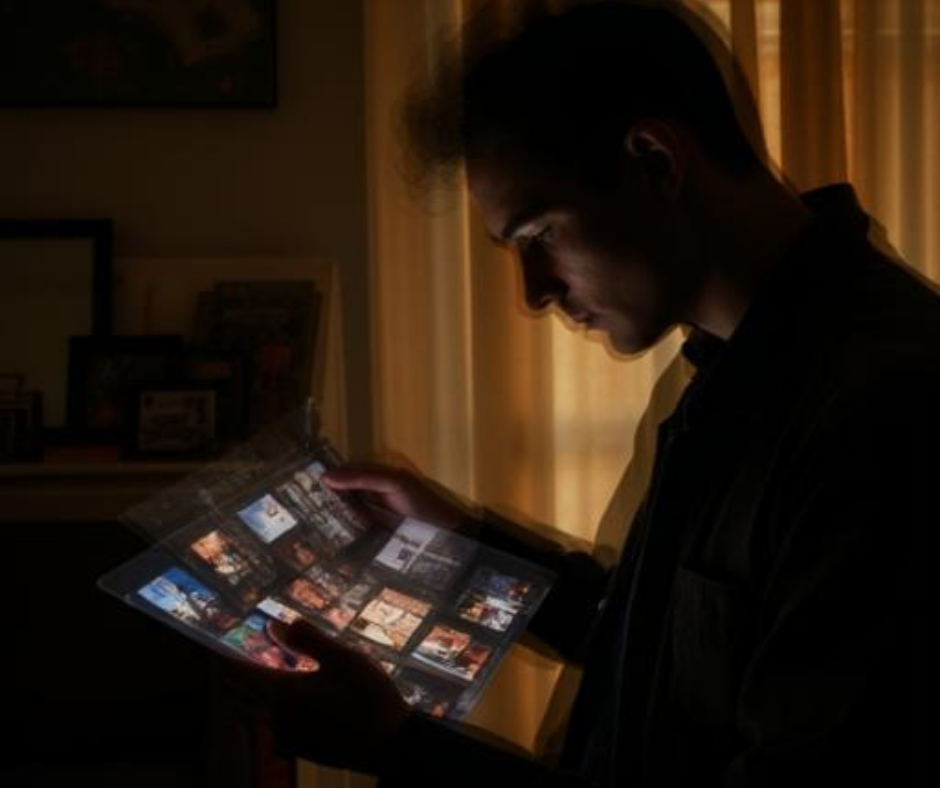
There is a moment in fatherhood that feels almost frightening—not because something bad has happened, but because you suddenly see clearly.
You realize how many people walk around calling something “normal” when it’s really just adaptation.
How many storms live behind calm faces.
How much trauma gets buried, managed, rationalized, or renamed instead of healed.
And you realize: this includes us.
Not as an accusation—but as a fact of being human.
We are not as stable as we think.
We cope. We survive. We improvise.
And most of the time, we don’t even notice the water we’re swimming in.
That realization can feel unsettling. But it’s not despair.
It’s clarity.
A Father’s Fear Isn’t About Reputation—It’s About the Soul
For me, that clarity turns quickly toward my son.
I imagine him one day grown, looking back on his childhood—seeing the cracks, the wounds, the shields, the limits of his parents. Seeing where I was strong. Seeing where I was not.
Every serious father carries this fear, whether he admits it or not.
Will he understand?
Will he forgive?
Will he be supported?
Will he seek help if he needs it?
Will his mother and I each have the capacity to love him well in our own broken ways?
But beneath all of that is a deeper, quieter fear:
Will he find God?
“What If That Doesn’t Happen?”
A friend once asked me a question that stopped me cold:
“What if it doesn’t happen?
What if all the prayers, the effort, the consolations—what if they don’t guarantee heaven?”
That question hurts because it exposes something we try not to face:
We cannot save our children.
We can guide.
We can protect.
We can love.
We can pray.
We can suffer for them.
But we cannot replace God.
That realization is painful—but it’s also where faith becomes real.
When God Becomes First—For Real
This is the moment when God stops being an idea or a safety net and becomes first.
Not first as a slogan.
First as a surrender.
It’s the moment a father admits:
“I am not here to control the outcome.
I am here to be faithful.”
God loves our children more than we do.
God desires their salvation more than we do.
God’s reach extends further than our influence ever could.
Putting God first doesn’t mean loving our children less.
It means loving them truthfully, without pretending we are their savior.
Our Task Is Not to Remove the Storm
Here is the hard truth of fatherhood:
We are not here to eliminate the storm.
We are here to stand in it.
Our sons don’t need perfect homes.
They need anchored fathers.
Fathers who:
remain calm when others escalate
repent when wrong
love consistently, not conditionally
protect without controlling
pray without performing
endure without hardening
A child raised by a man who puts God first always knows where the light was—even if he wanders for a time.
Yes, He Will See the Cracks
One day, my son will see my limits.
He’ll see the wounds.
He’ll see the complexity.
That doesn’t scare me the way it used to.
Because he will also see:
a father who stayed present
a father who chose calm over chaos
a father who did not abandon him emotionally
a father who stood steady when others could not
a father who trusted God when answers were not guaranteed
Children don’t need spotless parents.
They need faithful ones.
Light in the Dark
We are not meant to carry the world.
We are meant to carry the light.
Fatherhood is not about saving our children from every storm.
It is about being strong inside the storm—so they know where to stand when their own storms come.
God does the invisible work.
We remain faithful in the visible one.
That is enough.