St. Thomas Becket — When Responsibility Changes You
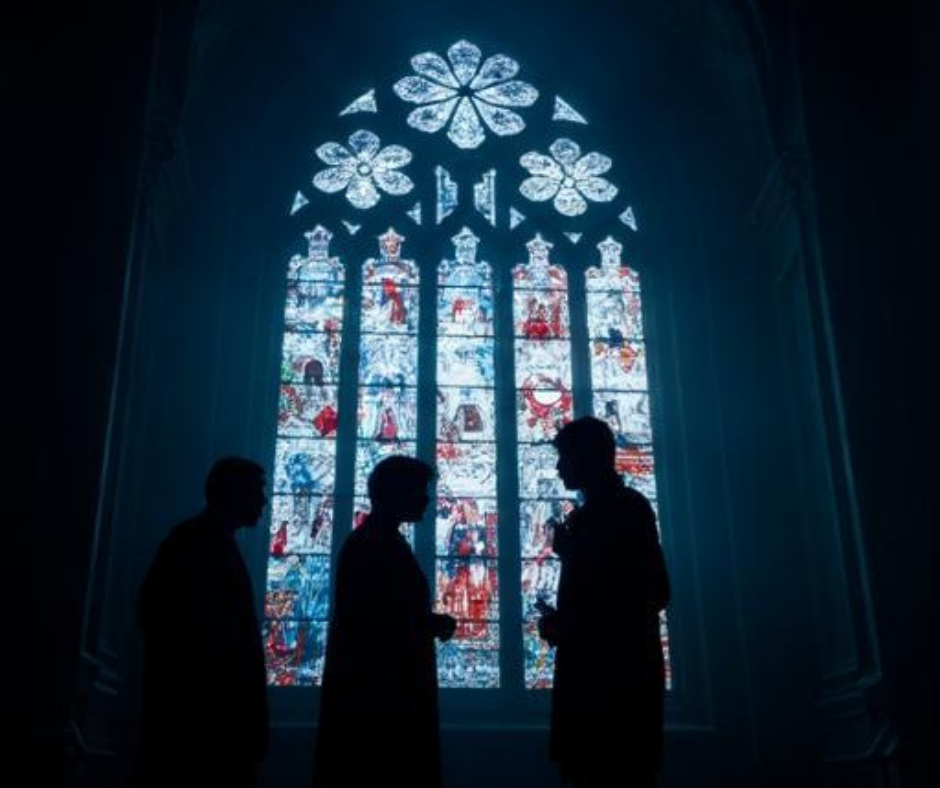
Optional Memorial of Saint Thomas Becket, Bishop and Martyr | USCCB
St. Thomas Becket has always struck me as a strange kind of saint — not because he was wild or extreme, but because his conversion was quiet, rational, and costly in ways most people don’t expect.
He wasn’t raised in a monastery.
He wasn’t a mystic chasing visions.
He wasn’t even particularly religious at first.
He was educated. Capable. Successful.
A man who understood how the world worked.
And that’s what makes him relatable.
Becket rose through the ranks of English society because he was sharp, loyal, and practical. King Henry II trusted him. They were close. Friends. He lived comfortably, thought clearly, and played the game well. By all accounts, he fit in.
Then everything changed — not because he chased holiness, but because responsibility was placed on him.
When Becket became Archbishop of Canterbury, something in him shifted. Not dramatically. Not emotionally. But fundamentally. He realized that the office meant something real. That truth carried weight. That conscience had a cost.
And once he saw that, he couldn’t unsee it.
The Part That Always Gets Me
Becket didn’t become a zealot.
He didn’t rage against the king.
He didn’t seek attention.
He didn’t try to overthrow the system.
He simply did his job.
He accepted that:
Science is science
Law is law
The Church has its authority
And conscience answers to God
That’s it.
And somehow, that was enough to make him dangerous.
That’s the part I relate to.
Because my own conversion wasn’t dramatic either.
It didn’t come with lightning or visions.
It came when things started to add up.
I realized the world’s explanations didn’t fully explain anything.
The pleasures I used to chase stopped satisfying.
Friendships changed. Some faded.
Priorities shifted quietly.
And suddenly, doing the right thing felt lonely.
Not heroic.
Not impressive.
Just… necessary.
That’s what Becket felt like to me.
Why His Witness Still Matters
When King Henry famously said,
“Will no one rid me of this turbulent priest?”
he wasn’t calling Becket violent or unstable.
He meant: Why won’t this man just go along with things?
And when Becket was murdered in Canterbury Cathedral, the shock rippled across Europe. People weren’t just horrified by the violence — they were shaken by the meaning of it.
The king of England had crossed a line.
And everyone knew it.
So much so that Henry II later had to perform public penance, barefoot, humiliated, acknowledging that something sacred had been violated.
That tells you how thick the air was at the time.
This wasn’t a private disagreement.
This was a public reckoning.
Why I Connect With Him
Becket reminds me that vocation isn’t always about becoming something new.
Sometimes it’s about finally being honest with what you already know.
He didn’t abandon reason.
He didn’t reject structure.
He didn’t escape responsibility.
He accepted it.
And that’s the part I recognize in my own journey — the slow realization that faith isn’t emotional comfort, it’s alignment. That obedience isn’t weakness. That integrity costs you things you once thought you needed.
Friends.
Approval.
Ease.
But it gives you something steadier in return.
St. Thomas Becket, Pray for Us
Pray for those of us learning how to stand quietly.
For those whose faith makes them inconvenient.
For those losing old identities as they grow into truer ones.
For fathers, workers, and seekers trying to live honestly in a loud world.
You didn’t die for drama.
You died because you wouldn’t lie.
And that still matters.