The Four Faces of the Gospel: Isaiah, Ezekiel, Aquinas, and the Vision of the Evangelists
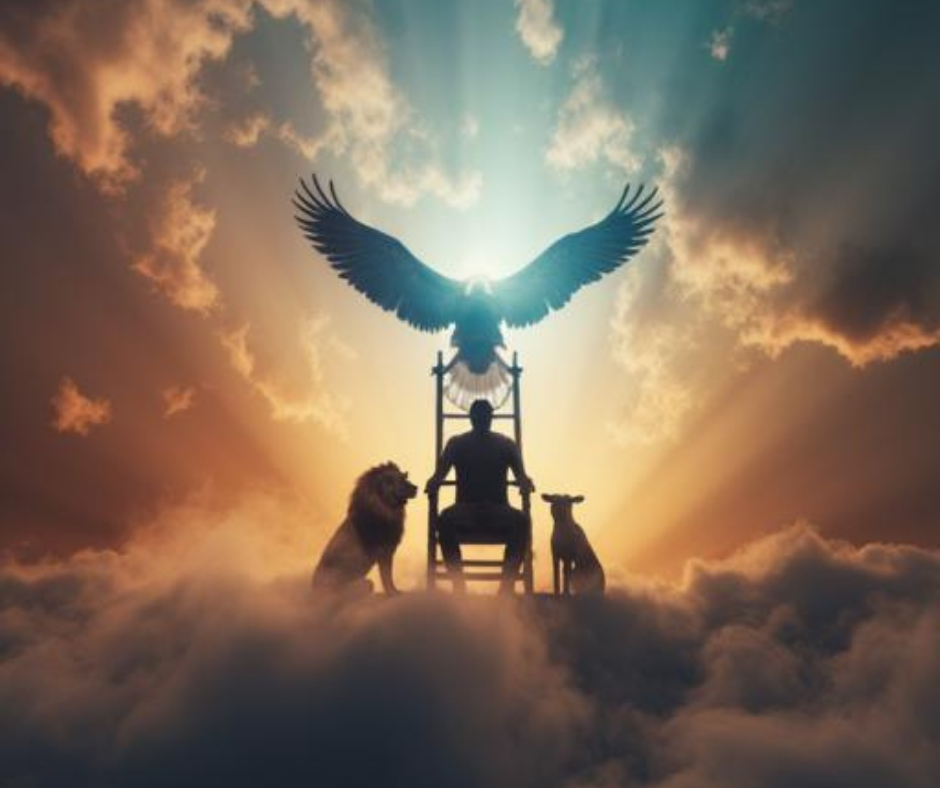
Across the pages of Scripture, three men encounter a mystery that cannot be measured: Isaiah, Ezekiel, and St. John all witness the throne of God. Their visions are separated by centuries—Isaiah around 740 BC, Ezekiel in 593 BC, and John near the end of the first century AD—yet what they see is unmistakably the same reality.
One throne.
One worship.
One God.
One heavenly liturgy that does not change.
And woven into these visions stands a profound truth: the fourfold Gospel—Matthew, Mark, Luke, and John—is not merely a collection of writings but a participation in the eternal worship of heaven. The Church Fathers saw the Evangelists reflected in the mysterious “four living creatures” of Ezekiel and Revelation, and St. Thomas Aquinas gave the definitive theological synthesis: each Evangelist bears one of the four faces, revealing Christ from a different angle, yet all in perfect harmony.
Isaiah and Ezekiel: Two Prophets, One Throne
Isaiah and Ezekiel lived far apart—nearly 150 years separated their ministries. Isaiah prophesied before the fall of Jerusalem, Ezekiel in the early years of the Babylonian exile. Their historical worlds were utterly different.
And yet their visions were not.
Isaiah sees Seraphim, the burning ones who cry “Holy, Holy, Holy.”
Ezekiel sees Cherubim, the creatures of knowledge who carry the divine throne.
Different choirs of angels—yet surrounding the same God, the same glory, the same heavenly sanctuary. The Church has always understood that the prophets are not imagining things; rather, they are being permitted to perceive the one, unchanging heavenly liturgy that is always ongoing before the face of God.
This heavenly worship becomes the foundation for how the early Christians understood the shape of the Gospel itself.
The Four Living Creatures and the Four Evangelists
Ezekiel describes a startling creature:
a single being with four faces—a man, a lion, an ox, and an eagle (Ezekiel 1).
John sees the same four creatures in the Book of Revelation, placed around the throne of God, ceaselessly praising Him.
The Fathers of the Church—St. Irenaeus, St. Jerome, St. Augustine, and later St. Gregory the Great—recognized in these faces a profound mystery:
the fourfold Gospel revelation of Jesus Christ.
Aquinas accepted this tradition and refined it, saying that the four creatures symbolize “the fourfold manifestation of Christ” given to the Church through the Evangelists. Their differences do not contradict; instead, they reflect the multifaceted splendor of Christ.
The Four Faces and the Four Gospels
1. Matthew – The Man

Matthew begins with a genealogy—Jesus Christ, son of David, son of Abraham.
The “man” face symbolizes:
Christ’s true humanity
the Incarnation
the Messiah born in real history
Matthew presents Jesus as the New Moses, the lawgiver who ascends the mountain to speak the Beatitudes. For this reason the Fathers saw in Matthew the “human face” of Christ—God who took flesh and entered the story of mankind.
2. Mark – The Lion
Mark opens with a roar:
“A voice crying out in the wilderness…”
The wilderness is the terrain of the lion, and Mark’s Gospel is fast, bold, and filled with the power of Christ.
The lion symbolizes:
royalty
courage
the victorious Christ
the Resurrection (the lion was believed to awaken with a roar)
St. Gregory the Great wrote that Mark displays the “royal strength” of Jesus, confronting demons, healing the sick, and striding toward the Cross with unshakable resolve.
3. Luke – The Ox (or Lamb)

Luke uniquely begins in the Temple, with Zechariah offering sacrifice.
The ox symbolizes:
priesthood
sacrifice
mercy
the gentleness of the Savior
Luke emphasizes Christ as the compassionate Priest who offers Himself for the world. The parables of mercy—the Good Samaritan, the Prodigal Son—unveil a heart both strong and tender, a heart that bears the yoke of our salvation.
In the ox, the Fathers saw Christ the Victim who lays down His life willingly.
4. John – The Eagle

John’s Gospel does not begin on earth. It begins in eternity:
“In the beginning was the Word…”
The eagle symbolizes:
contemplation
Christ’s divine nature
the soul lifted upward
the light of the Trinity
John soars higher than the others, not contradicting them but revealing what only love can see: the eternal generation of the Son, the unity of the Father and Son, and the intimate heart of God.
St. Jerome said, “John rises like an eagle and gazes directly into the sun,” meaning the unfathomable mystery of the Godhead.
Aquinas: One Vision, Four Angles, One Christ
St. Thomas Aquinas teaches that prophetic visions reveal one truth, but under diverse forms suited to the person seeing them:
Isaiah glimpses the burning charity of God.
Ezekiel glimpses the fullness of divine knowledge.
John glimpses the completed revelation in Christ.
The Evangelists, inspired by the Holy Spirit, express these same divine attributes through the shape of their Gospels.
For Aquinas, the unity of the four creatures means that:
“All Scripture is one harmonious voice through the one Spirit.”
(Commentary on Ezekiel)
The four Gospels are not separate documents but four windows opening onto the same eternal Christ.
The Meaning of the Four Faces for Us
The four faces are not merely symbols; they are invitations:
Matthew (Man): Remember Christ took your humanity into His own.
Mark (Lion): Stand firm in spiritual battle with the courage of Christ.
Luke (Ox): Offer your life as a living sacrifice of mercy.
John (Eagle): Let your prayer rise higher, toward the mysteries of God.
Together they show the whole Christ—incarnate, powerful, sacrificial, divine.
And together they remind us that the Gospel is nothing less than an earthly participation in the heavenly throne room Isaiah, Ezekiel, and John saw.
The same God.
The same worship.
The same glory.
And now, through the Evangelists, that same heavenly light shines directly into the Church and into our hearts.