
Why God Gives Us Greatness in a World That Breaks Us
Psalm 106 shakes us because it shows the fragility of the human heart. Israel saw the Red Sea split, manna fall from heaven, and the mountain tremble with the presence of God — and yet they built a golden calf within days. A people rescued by miracles collapsed under impatience.
It’s easy to look at that story and feel disgust: How could they fall so fast? How could they replace God so easily after everything He did? But the truth is deeper and more uncomfortable: they are us. Their story is the blueprint for the human condition — and for God’s mercy.
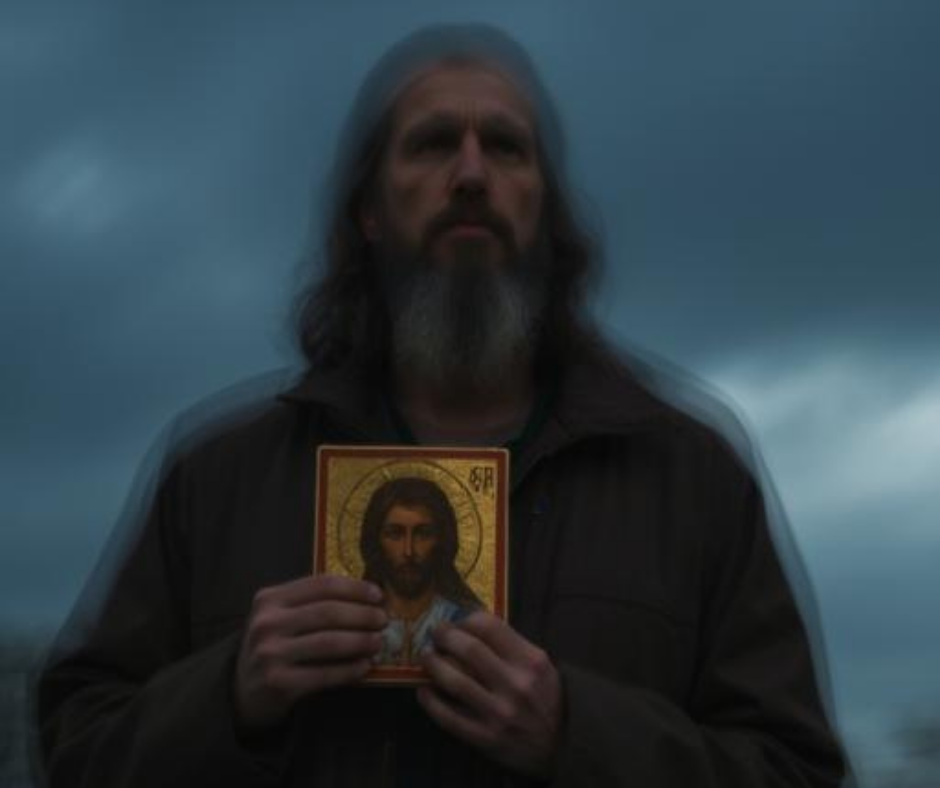
Reflection — Optional Memorial of Saint John of Damascus, Priest and Doctor of the Church
Saint John of Damascus stands at a decisive crossroads in the life of the Church: a time when images were under attack, tradition was questioned, and clarity was desperately needed. He did not respond with noise or outrage. He responded with reason, faith, and courage—a rare combination that still instructs us today.
Living under Muslim rule in the 8th century, John was not protected by imperial favor or ecclesial power. In fact, his defense of sacred images during the Iconoclast Controversy placed him at great personal risk. Yet from his monastery at Mar Saba, he articulated one of the Church’s most important theological truths:
Because the Word became flesh, matter can now mediate grace.
This is the heart of John’s witness. He did not argue that images replace God—but that they proclaim the Incarnation. If God truly entered history, took on a human face, walked the earth, then portraying Him is not idolatry—it is confession.

Zeal, Fatherhood, and the Slow Purification of the Soul
There is a pattern in Scripture—a rhythm God uses to form His saints—that we often overlook when we’re in the middle of our own spiritual growth.
God starts us with zeal.
Then He purifies the zeal.
Then He restores it with wisdom, gentleness, and true authority.
You can trace this in Elijah.
You can trace it in the Apostles.
You can trace it in Jesus Himself.

The Masculine Virtue Everyone Feels — Even the Pagans Know It
To live as a disciple of Christ is to embrace this profound calling with sincerity and humility. It is to see every interaction as an opportunity to reflect love that is deeper and more transformative than mere human kindness. Grace does not discard the good found in natural human inclinations but elevates them, infusing them with divine purpose.

Seeing Beyond Emotion: Learning God’s Wisdom Through 1 Corinthians 2
Co-parenting, family stress, and personal relationships all have a way of stirring our emotions faster than anything else in life. A tone of voice, the wrong look, or a misunderstood comment can send the heart racing and the mind into overdrive. We start reading motives, assuming intentions, and judging situations before we ever pause to breathe.
But when I opened 1 Corinthians 2, something shifted.

The Night I Cried Out — And the God Who Found Me Anyway
There was a night — one I’m not proud of, but one I’ll never forget — when I sat at a table with tarot cards, crystals, candles, and a desperation that felt louder than any prayer I had ever prayed. I was trying to talk to “spirits,” trying to force blessings out of shadows, trying to find riches, success, and meaning through whatever voice would answer.

When the Intake Form Breaks You Open — And Why That’s Not the End of the Story
It’s hard to see your own life spelled out like that. Hard to admit that you’ve been moving through the world without a safety net: no friend circle, estranged biological family, no regular community, no one checking in, no one to lean on. I co-parent, I raise my son, I try to be his example — but in the quiet moments I realize I don’t have an example of my own.